
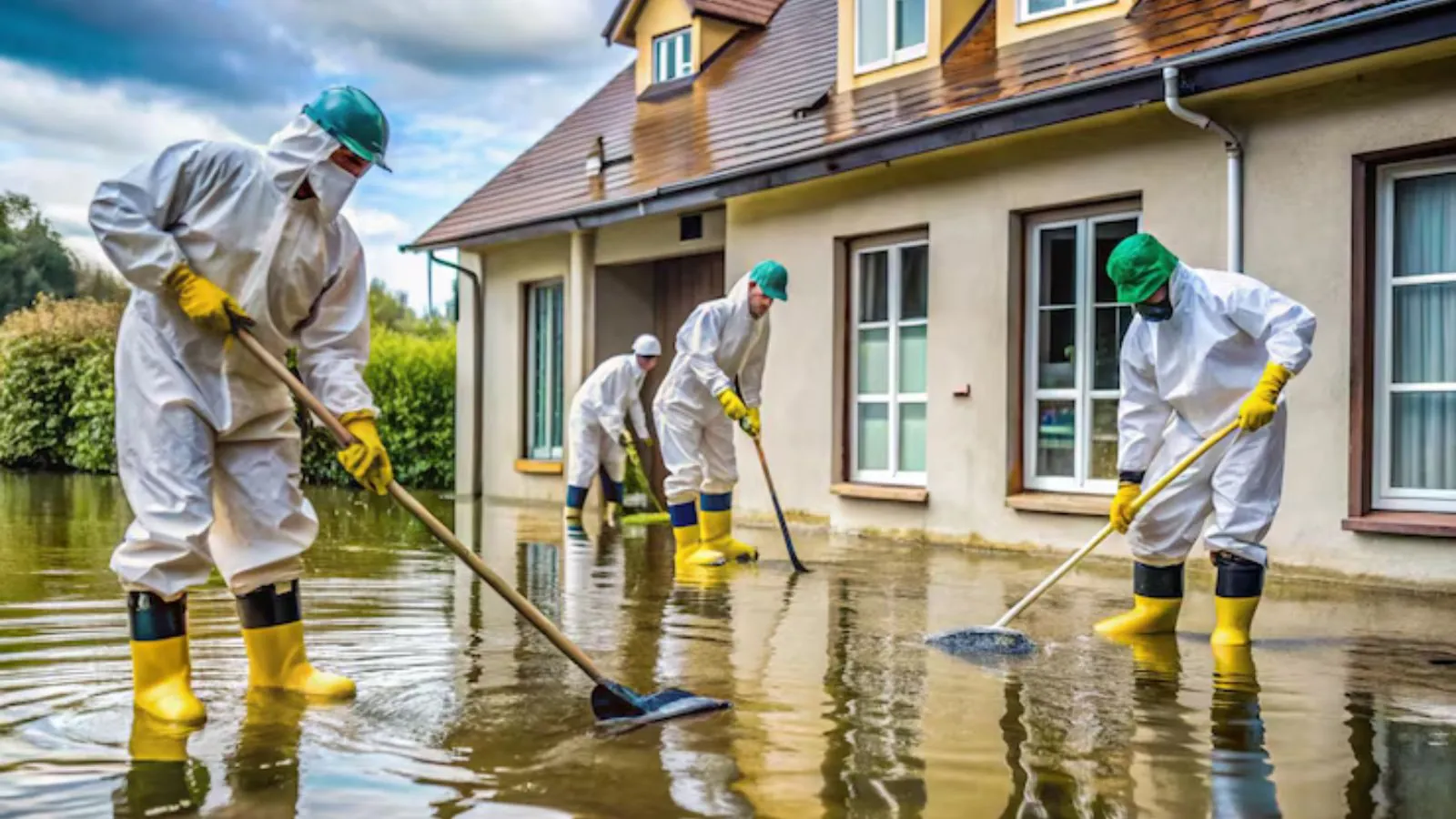
Flood damage restoration is the cleanup of water that came from outside the plumbing: river overflow, surface runoff and groundwater pushing into a building. It differs from a burst pipe because floodwater carries soil, bacteria and chemicals, so it is treated as category 3 water under the ANSI/IICRC S500 standard.
Paramus has real exposure. The Saddle River runs along the western side of the borough, and Bergen County's hazard mitigation plan counts 782 acres of Paramus, 11.64 percent of its land, in the 1 percent annual chance floodplain. That does not mean every street floods. It means a heavy rain on a saturated watershed can put water in places that stay dry in an ordinary year.
When floodwater is an emergency
If water is rising or standing in the house, the dispatch line is open 24/7 and the first job is safety. Keep out of floodwater that may touch outlets, appliances or a panel, because it can carry current. During Hurricane Irene in 2011, a tributary of the Saddle River flooded Dunkerhook Road in Paramus and residents reported that the water near downed wires was electrified.
Call the utility or 911 for any electrical or gas risk before you call us. Then move people and pets to dry ground, photograph the waterline from a safe spot and wait for instructions from the dispatcher. Do not run fans or a household vacuum in floodwater, since both spread contamination.
How flood cleanup differs from other water damage
Flood jobs start with extraction, but they do not stop there. Porous materials that sat in category 3 water, such as carpet, pad, insulation and low drywall, are usually removed rather than dried. Hard surfaces are cleaned and sanitized, then the structure is dried and checked with moisture meters.
That is a larger scope than a clean supply-line leak, which is why the price is explained before work starts. The crew walks the property, marks the waterline on each wall and lists what comes out. You see the list, and your insurer can see the same photos and readings.
What gets removed and what gets saved
Solid hardwood and concrete can often be saved if the water is removed quickly and the surface is cleaned. Carpet, padding, fiberglass insulation and drywall that wicked floodwater are generally discarded. Upholstered furniture that sat in contaminated water is rarely worth cleaning.
Honest sorting saves money. A crew that tells you early what cannot be saved lets you start the claim and the rebuild sooner, instead of paying to dry materials that will fail anyway.
Water still rising?
Call (833) 521-1033 and tell the dispatcher how deep it is.
Drying and sanitizing the structure
After removal, air movers push moving air across the remaining surfaces while dehumidifiers pull moisture out of the room. Wall cavities are opened where meters show water behind the finish. Readings are logged every visit until the structure reaches its dry standard.
Cleaning follows the drying plan, not the other way around. Antimicrobial treatment goes on cleaned surfaces, and anything that stayed wet long enough to grow mold is flagged for the mold remediation team before it is closed up. Drying methods are explained in detail on the structural drying page.
Flood versus other water: what changes
| Question | Flood or surface water | Clean supply-line leak |
|---|---|---|
| Water category | Category 3, grossly contaminated | Category 1, clean at the source |
| Carpet and pad | Usually removed | Often dried in place |
| Drywall | Cut out to above the waterline | Spot repair or dry in place |
| First safety concern | Electrical hazard and contamination | Shutting off the water |
What affects flood cleanup cost
Flood losses vary more than almost any other kind. These factors set the scope.
Depth and duration
Water that stood for days soaks deeper than water pumped out the same night.
Contamination
Category 3 water adds protective gear, disposal and sanitizing.
Area affected
Square footage and the number of floors decide equipment and drying days.
Rebuild scope
Drywall, insulation, flooring and trim are priced apart from mitigation.
Scope and price for flood damage cleanup are explained before work starts. Call (833) 521-1033 and describe the water, the rooms and what you can see.
Flood damage and your insurance
New Jersey's Department of Banking and Insurance says homeowners policies exclude water damage caused by flood. Flood coverage comes from the National Flood Insurance Program or a private insurer, and the state notes you do not have to live in a mapped flood zone to buy it. A new policy is not effective for 30 days.
Water that backs up through a drain is a separate question from rising floodwater, so describe the cause to your insurer precisely. Photograph everything, keep receipts for temporary repairs and ask your insurer what your policy covers. Nobody on this line can tell you a claim will be approved.
Flood risk around Paramus
Check your own address on the FEMA Flood Map Service Center before you decide how much risk you carry, because a mapped zone can cover part of a street and not the rest. The 2014 USGS flood inundation maps for the Saddle River cover a 5.4 mile reach through Ridgewood and Paramus, and they are the clearest public look at how water spreads at different gage heights.
Neighbors in River Edge and Oradell deal with the Hackensack River instead, and the same flood service reaches both. In Paramus, the Dunkerhook area has the most thoroughly documented brook flooding history.
Flood Damage Cleanup questions
Is flood damage the same as water damage?
The cleanup methods overlap, but the safety rules do not. Floodwater is category 3, so porous materials usually come out and surfaces are sanitized. A clean pipe leak can often be dried in place. For the standing-water step on its own, see water extraction.
How long does a flooded home take to dry?
Drying time depends on the materials, the depth and the weather. Crews check moisture readings each visit and stop when the readings reach the target, so no honest number exists before someone measures. Most structures take several days of equipment running.
Will you waterproof my basement afterward?
No. Restoration repairs damage. Waterproofing changes grading, drainage or foundation walls and is a separate trade. If water keeps coming in, you will want that work done after the cleanup. A flooded lower level also has its own page on basement water damage cleanup.
Do you handle flood damage emergencies at night or on weekends in Paramus?
Yes. The line is open 24/7, and flooding does not follow office hours. Call (833) 521-1033, say where the water is and whether it is near power, and follow the safety steps the dispatcher gives you while the job is arranged.