
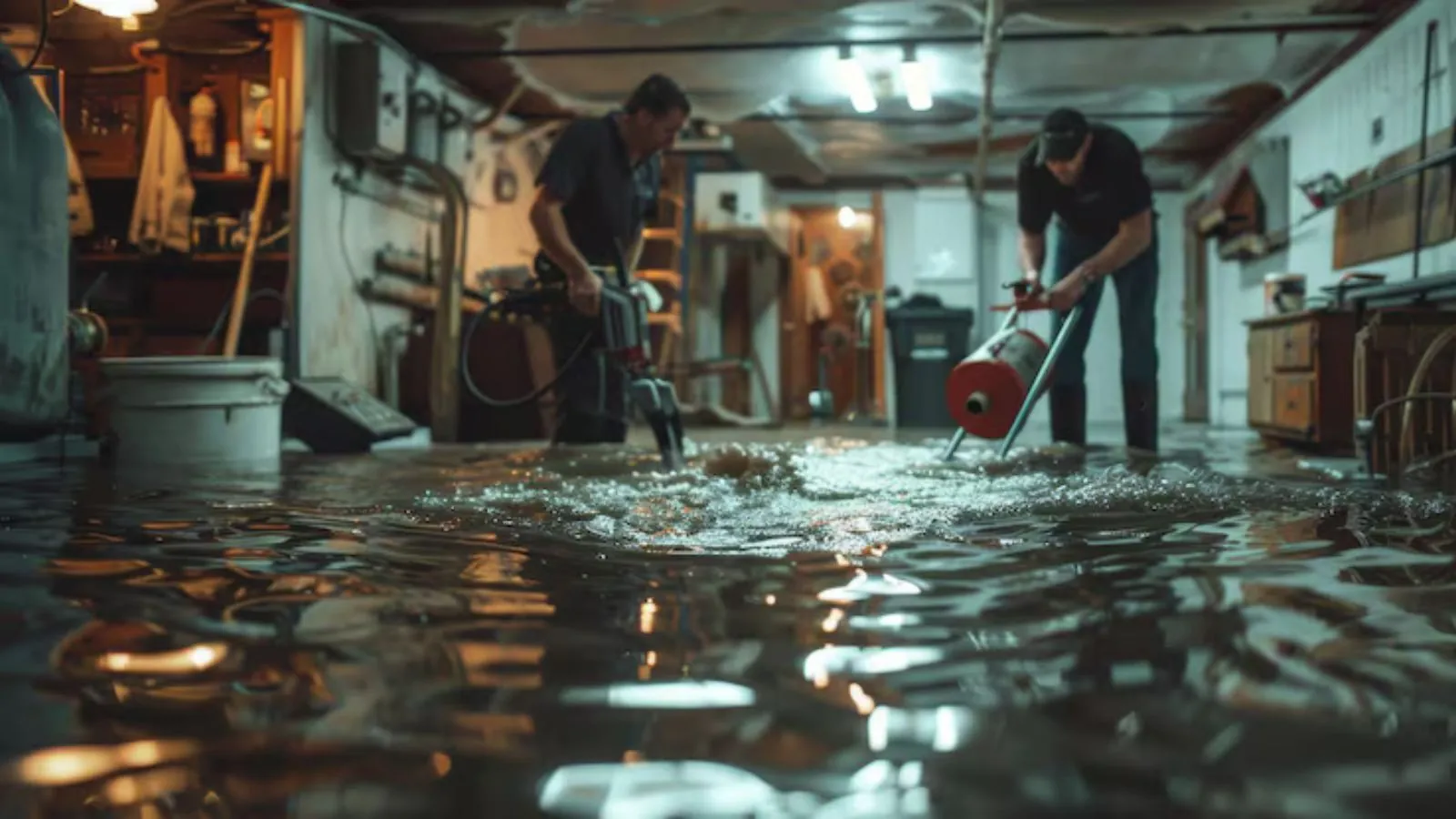
Water extraction is the removal of standing water and water held in carpet, pad and flooring using pumps and extraction units. It is the first mitigation step after the source is stopped, and it is the intent behind searches like water removal and emergency water removal.
Every hour that water sits, it moves into drywall, subfloors and framing. Extraction slows that spread, and it makes the drying stage faster and less costly, because dehumidifiers can only pull out what the pumps did not.
When standing water is an emergency
If water covers the floor, call right away. The line is open 24/7 and the dispatcher will ask how deep it is, where it came from and whether outlets or appliances are underwater. Those answers decide whether a submersible pump, a truck-mounted extractor or both go to the job.
While you wait, stop the source if you can reach the valve safely, lift small items off the floor and keep everyone out of water that touches electrical devices. Never walk through water in a flooded room to reach a panel. Call the utility or 911 for electrical or gas risk before you call us.
Pumps, wands and extraction units
Deep water goes out first with a submersible pump and hose run to a safe drain or the exterior. Shallow water and water held in carpet comes out with a wand attached to an extraction unit that pulls moisture through the fibers. Hard floors are squeegeed toward the pickup point.
Water is discharged where it will not create a new problem, which means away from the foundation and neighbors. Contaminated water is handled differently, and the dispatcher will ask about the source to plan for that.
What happens right after the water is gone
Extraction leaves materials damp, not dry. The crew measures moisture in the floor, baseboards and lower walls with meters and thermal imaging, and marks the wet zone. Carpet is lifted and the pad is checked, because pad holds water long after the surface feels dry.
From there the job moves to structural drying with air movers and dehumidifiers. Skipping that stage is how a cleaned-up room ends with musty smells and mold two weeks later.
Water still spreading?
For water extraction in Paramus, a dispatcher is on the line around the clock. Call (833) 521-1033.
Water removal is not the same as yard pumping
Callers sometimes ask about pumping a backyard, a pool deck or an area outside the walls. That is a different kind of service from interior extraction, and this line focuses on water inside buildings. If the water is outdoors only, the dispatcher can say honestly whether it is something that can be handled.
Where the water came from changes the plan
A failed supply line gives clean water that is easy to extract. A washing machine overflow or toilet overflow adds contamination. Floodwater and sewage add more. Sources have their own pages, including burst pipes, flood damage and sewage backups.
Equipment used for extraction
| Equipment | What it does | When it is used |
|---|---|---|
| Submersible pump | Moves deep standing water through a hose | Water several inches deep |
| Extraction unit with wand | Pulls water from carpet, pad and floors | Wet carpet and shallow water |
| Moisture meter | Reads moisture in materials | After removal, to find wet zones |
| Thermal camera | Shows temperature differences from wet areas | Finding hidden moisture |
What affects water extraction cost
Extraction is usually the shortest stage, but the scope still varies.
Depth and volume
More water needs bigger pumps and more time.
Water category
Contaminated water adds protective steps and disposal.
Access
Basements, stairs and tight rooms change how equipment is set up.
What follows
Drying and repair are separate stages with separate scopes.
Scope and price for water extraction are explained before work starts. Call (833) 521-1033 and describe the water, the rooms and what you can see.
Extraction and your claim
Insurers generally expect you to limit further damage, and the state homeowners guide says to make necessary temporary repairs. Prompt extraction documented with photos and readings supports that. Whether the loss is covered still depends on the cause and your policy, so ask your insurer.
Extraction calls around Paramus
Basements near brooks and tributaries and ground-floor retail space along Routes 4 and 17 produce most of the extraction calls in the borough. The same line serves Emerson and Washington Township, where finished lower levels and slab rooms need different approaches.
Water Extraction questions
How is extraction different from drying?
Extraction removes liquid water. Drying removes moisture that is still held in materials and air. A job needs both, in that order.
Can I just use a shop vacuum?
A shop vacuum handles a small spill. It cannot clear a flooded room, and it should never be used on sewage or floodwater. Sparks and contamination are the main risks.
Do you extract water after the rain from outside?
Interior water after rain is covered. Outdoor pumping is a different service, so tell the dispatcher what you are seeing and you will get an honest answer.
Do you handle water extraction emergencies at night or on weekends in Paramus?
Yes. Water extraction is one of the most common night and weekend calls. The line is answered 24/7, so call (833) 521-1033 whenever you find standing water.