
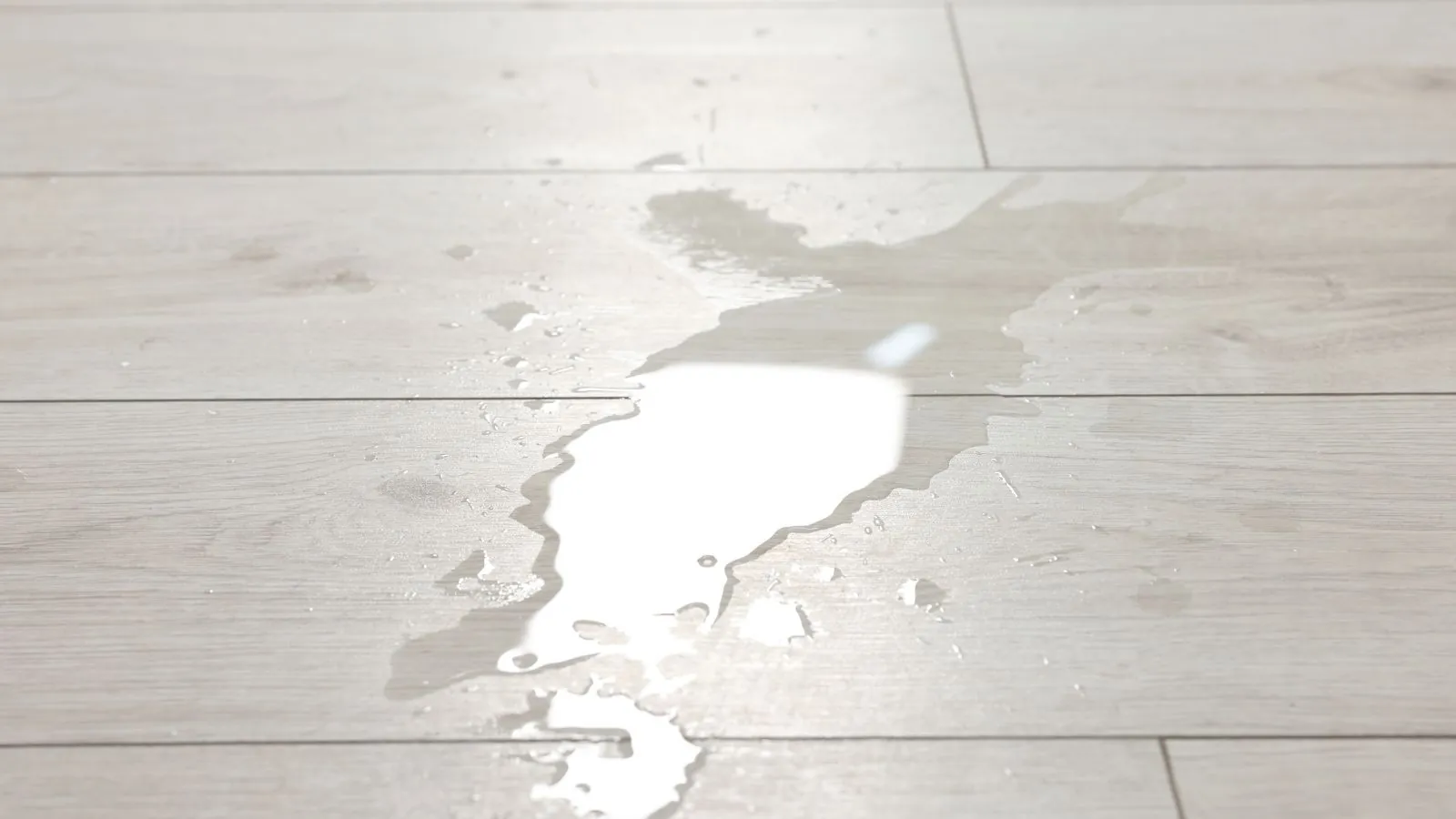
Kitchen water damage restoration dries and repairs the floor, cabinets, walls and subfloor after a leak in a kitchen. The room has a sink, a dishwasher, often a refrigerator water line and a lot of cabinetry, so a leak tends to hide behind and beneath things.
Callers describe it in plain words: water under the sink, a dishwasher that leaked onto the floor or a floor that is warping near the refrigerator. All of these are kitchen losses and the first job is the same, which is to stop the water and find where it went.
Common kitchen leak sources
Supply lines under the sink, a loose drain trap, a dishwasher hose or door seal and an ice maker line are the usual suspects. Each leaks slowly at first, so the damage is often found only after a cabinet base swells or the floor lifts.
Turn off the shutoff valve under the sink or at the appliance. If you cannot find it, close the main. For the appliance itself, see appliance leak damage.
Cabinets, toe kicks and subfloor
Particleboard cabinet bases swell when wet and do not return to shape. Solid wood and plywood often dry. Toe kicks, the strip at the cabinet base, hide water against the floor, so crews remove them to read moisture and let air in.
Under the cabinets the subfloor may be wet. Vinyl, tile and laminate over it can trap water, and the flooring may need to come up in places. See hardwood floor repair if the kitchen has wood floors.
Water still spreading?
For kitchen water damage in Paramus, a dispatcher is on the line around the clock. Call (833) 521-1033.
Drying a kitchen
Air movers and dehumidifiers are placed so air passes under and behind cabinets without moving them whenever possible. Moisture readings on the cabinet base, wall and floor show when drying is finished. Structural drying explains the method.
If the water went through the ceiling below, the lower room needs drying as well, as covered on ceiling water damage repair.
Mold in kitchens
Warm damp spaces behind a sink or dishwasher support growth if a leak sits for a week or more. A musty odor from under the sink is a clue. Do not scrub it dry. Read mold remediation first.
What to tell the dispatcher
Say which fixture or appliance leaked, whether the water is off, how long it ran and what floor you have. Photos of the cabinet base and the floor help the crew plan.
If you rent, tell the property manager as well, since the building may need its own plumber.
Kitchen materials after a leak
| Material | Often | Note |
|---|---|---|
| Particleboard cabinet base | Replaced | Swells and loses strength |
| Plywood or solid wood | Dried | Depends on exposure |
| Drywall behind cabinets | Cut and dried | Wet cavities hold water |
| Laminate or vinyl floor | Lifted to dry beneath | Traps water below |
What affects kitchen cleanup cost
Cabinets raise the cost because they are expensive to remove and rebuild.
Cabinet material
Particleboard and wood behave differently.
Flooring type
Some flooring must come up.
Water source
Clean supply water costs less than drain water.
Drying time
Dense subfloors dry slowly.
Scope and price for kitchen water damage are explained before work starts. Call (833) 521-1033 and describe the water, the rooms and what you can see.
Kitchen leaks and coverage
Sudden leaks are often handled differently from slow ones under homeowners policies. Ask your insurer and keep photos and any plumber invoice.
Kitchen leaks around Paramus
Many local homes have finished kitchens over basements, so water can show up below. The service reaches River Edge and Oradell as well. For the drain side, see sewage backup cleanup.
Kitchen Water Damage questions
Can my cabinets be saved?
Often, if they are solid wood or plywood and dried quickly. Particleboard usually cannot.
Do I need to move the dishwasher?
The crew decides. Sometimes drying can happen without moving it.
Should I call a plumber first?
Shut the water off, then call both. The plumber fixes the leak and we dry the damage.