
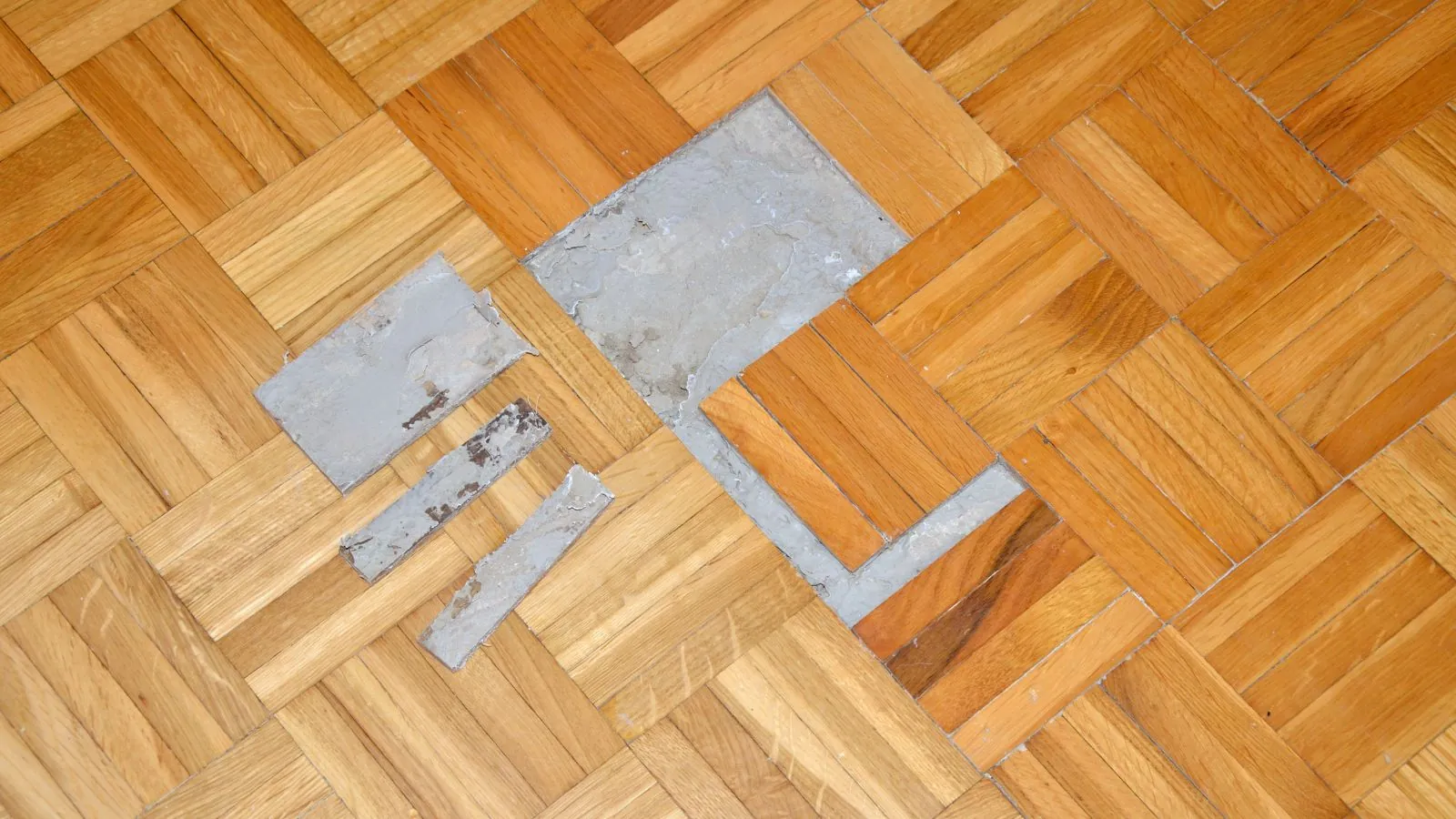
Hardwood floor water damage repair is the work of drying wet wood flooring and deciding whether it can be saved. Wood absorbs water and swells, and the boards then cup, crown or buckle. Speed matters, because boards that are dried quickly often settle back flat.
Callers often notice cupping first, with board edges rising higher than the centers. That points to moisture below or inside the boards, and it is worth acting on before the finish starts to peel.
What water does to wood floors
Solid hardwood takes in water through the edges and the underside. The boards expand and push against each other, which can lift them off the subfloor. Engineered flooring has layers that can separate.
Cupping means the edges are higher than the centers. Crowning is the reverse. Buckling is a board lifting off the floor entirely, which usually means the floor was wet for a long time.
Drying wood floors
Crews use specialized drying mats or panels that pull moisture up through the boards, along with air movers and dehumidifiers. Readings on the wood and the subfloor show progress. The process is slow because wood gives up water gradually.
Drying too fast can crack boards, so the plan is controlled. For the general method see structural drying.
Water still spreading?
For hardwood floor water damage in Paramus, a dispatcher is on the line around the clock. Call (833) 521-1033.
Sand, refinish or replace
After boards are dry and flat, many floors can be sanded and refinished. Boards that stay cupped or have split are replaced. A match to the old wood is possible but not exact, and a refinishing contractor can blend new boards with old.
If water sat under the floor for days, the subfloor may need attention too. Basement cleanup and kitchen restoration cover common sources.
Mold under floors
A musty smell from a wet floor can mean growth underneath. Do not seal a wet floor with new finish. See mold remediation for what to do if you suspect it.
What to do right now
Remove rugs and wipe up standing water. Keep foot traffic off the wet area. Do not use heat guns or a household vacuum on wet boards, and do not cover the floor with plastic, which traps moisture.
Photograph the floor before it changes, then call so a crew can read the moisture and recommend drying.
Questions to ask about your floor
Is it solid or engineered wood, and how thick is the wear layer? Is it nailed, glued or floating? The answers change how it dries and whether it can be sanded. A flooring contractor can tell, and the restoration crew reads moisture to confirm.
Tell the dispatcher what is under the floor, such as a crawl space or a basement, since moisture can rise from below.
Water from below
A wet crawl space or basement can wet the floor from underneath without any puddle on top. Cupping with no visible leak often means this. See crawl space water damage for that side of the problem.
Fixing the moisture below is the first step, because boards will cup again if the source stays.
Hardwood floor outcomes
| Condition | Often | Next step |
|---|---|---|
| Mild cupping, caught early | Flattens as it dries | Monitor, then refinish |
| Heavy cupping | May stay cupped | Sand or replace |
| Buckling | Boards lift | Replace affected boards |
| Engineered layers split | Not repairable | Replace |
What affects hardwood floor repair cost
The outcome depends on how long the floor stayed wet.
Floor type
Solid and engineered wood behave differently.
Time wet
Each day makes damage worse.
Area
More square footage means more drying.
Finish work
Sanding and refinishing is a separate trade.
Scope and price for hardwood floor water damage are explained before work starts. Call (833) 521-1033 and describe the water, the rooms and what you can see.
Wood floors and coverage
Coverage depends on the cause of the leak and your policy. Ask your insurer and photograph the boards before work starts.
Wood floors in Paramus homes
Many older homes have hardwood under carpet. The service reaches Oradell and Emerson. For carpet, see carpet water damage.
Hardwood Floor Water Damage questions
Can wet hardwood be saved?
Often, if the water source is fixed and drying starts promptly.
Should I sand it right away?
No. Wait until readings show the wood is dry.
How long does cupping take to settle?
It can take weeks after drying. A flooring contractor can judge when to refinish.